
Survey
Month 1Two site days, soil and water testing, an energy audit and a written discovery report.
You stop planting blind.
The Abundance Blueprint · Five places a year
Twelve months, one to one, on your own land. We survey it, plan food, water, energy and waste together, plant your first beds and stay with you all year, so you get it right first time.
£495, half a day on your land. Taken off the Blueprint if you join.
Not ready? Get the free scorecard firstThe gap nobody talks about
Property, cash, stocks, gold. Every asset you hold assumes the shops are open and the lights are on.
01 Sound familiar?
We tried growing our own. Honestly, I might as well have bought them at the supermarket.
Without a planLeggy tomatoes, slugs, lettuce that bolts, and raised beds half full of weeds.
With a plan for your siteTied in, fed and planted at the right time, so the fruit ripens.
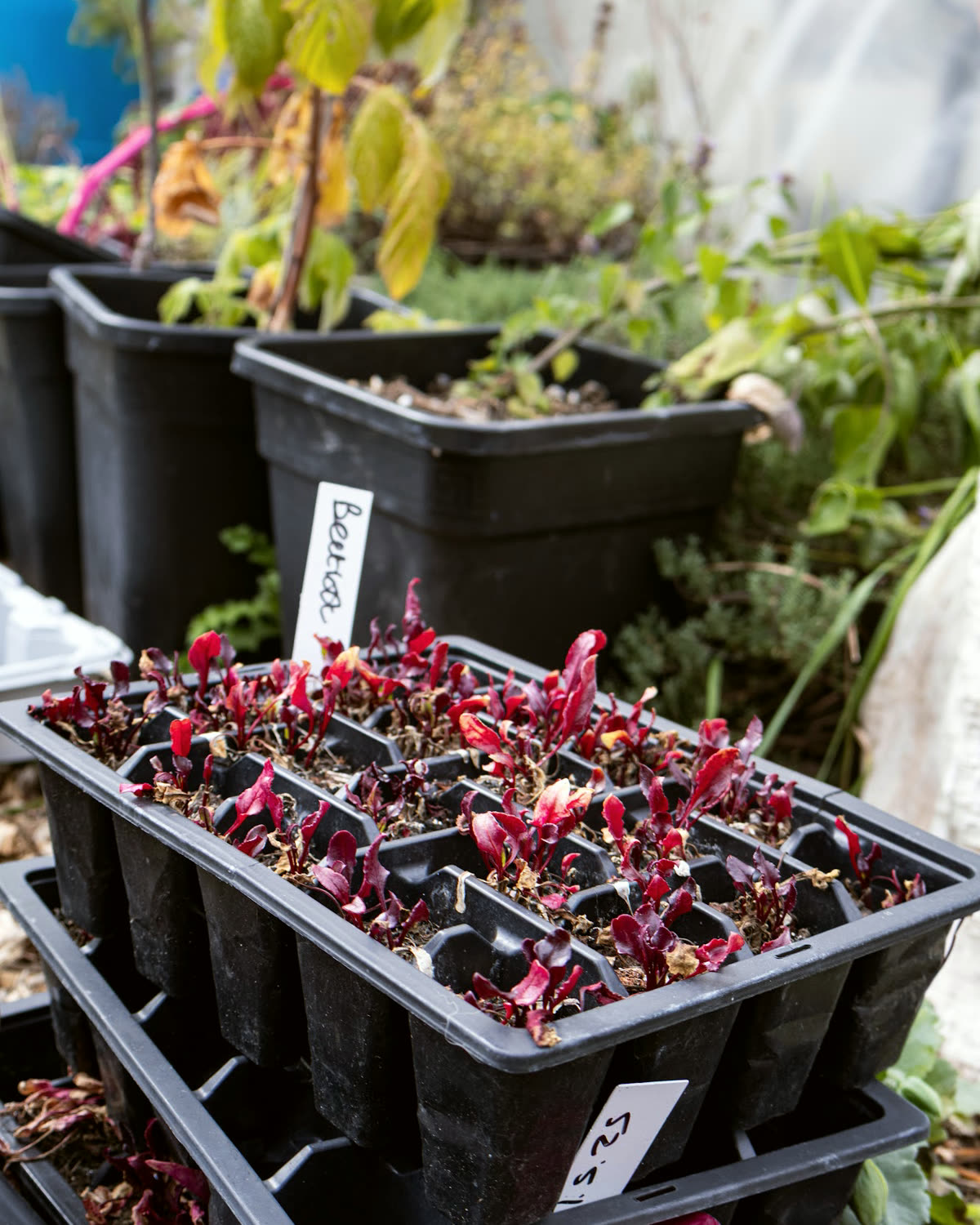

Tomatoes all leaf and little fruit, still green in September. Slugs. Lettuce that bolted. Raised beds, now half full of weeds that nobody mentions.
“I've got an acre of grass that does nothing except cost me a mowing bill.”
“I've got lots of money and very little time. I can't spend my weekends learning this the hard way.”
“When the shelves went empty in COVID, I realised we'd have no idea what to do if things went properly wrong.”
Food prices. Energy bills. Supply chains. The grid going down. You think about it more than you say, and you have no plan B.
“The kids are on screens all day, and I'm not around enough. I feel like I'm missing it.”
You didn't fail at growing. You were never given a plan for your site, or anyone to ask.

02 Where are you now?
Answer in your own words. You'll see which stage of the SEEDS Method suits you first. Your answer stays in your own browser, nowhere else.
Question 1 of 3
03 Why listen to us
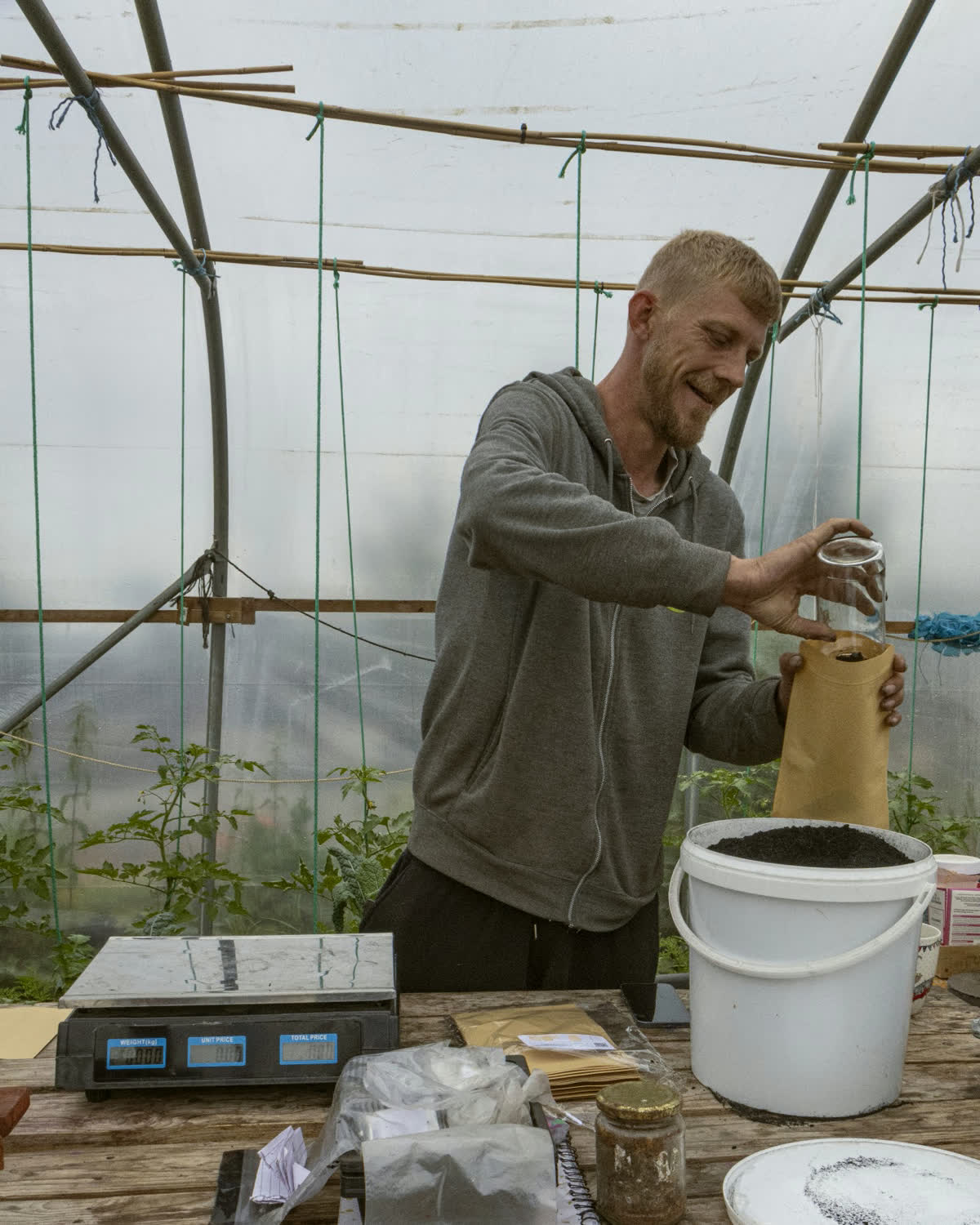
Lewis Vernum, founder. He delivers the first five Blueprints himself.
Lewis Vernum, who founded Project Abundance, spent 2016 to 2019 in Bulgaria, building with cob and adobe.
He harvested rainwater into the veg beds, and grew and preserved food.
“Self-sufficiency on your own is a myth and a full-time job. It only works with community.”Lewis Vernum, founder
Relationships, not a conveyor belt.How Lewis works
spent learning this the hard way: about £100,000 on the systems running at The Green Backyard, and at least £200,000 more on trial and error.
We learned it the hard way, so you don't have to.
Running on site today, on a three-quarter-acre plot in Peterborough: food production, solar for refrigeration, lighting and tool charging, and a pumped rainwater catchment.
Not ready to book yet?
The best way to understand this is to stand in it. Book a private visit to The Green Backyard in Peterborough. Walk round the beds, the polytunnels, the rainwater and the solar with Lewis, and ask anything. Visits are by booking only.
Book a private visitThe video plays from YouTube. Nothing loads from YouTube until you press play.
04 Four systems, one plan
Food is where we start, because it's the part you'll enjoy. But a resilient home covers four systems, and the Blueprint plans all four together, for your site.
“I want to know that if any of our systems fail, I can provide food, water, energy, shelter, and warmth along with options around sanitary solutions for my family and wider network.”Lewis Vernum, founder
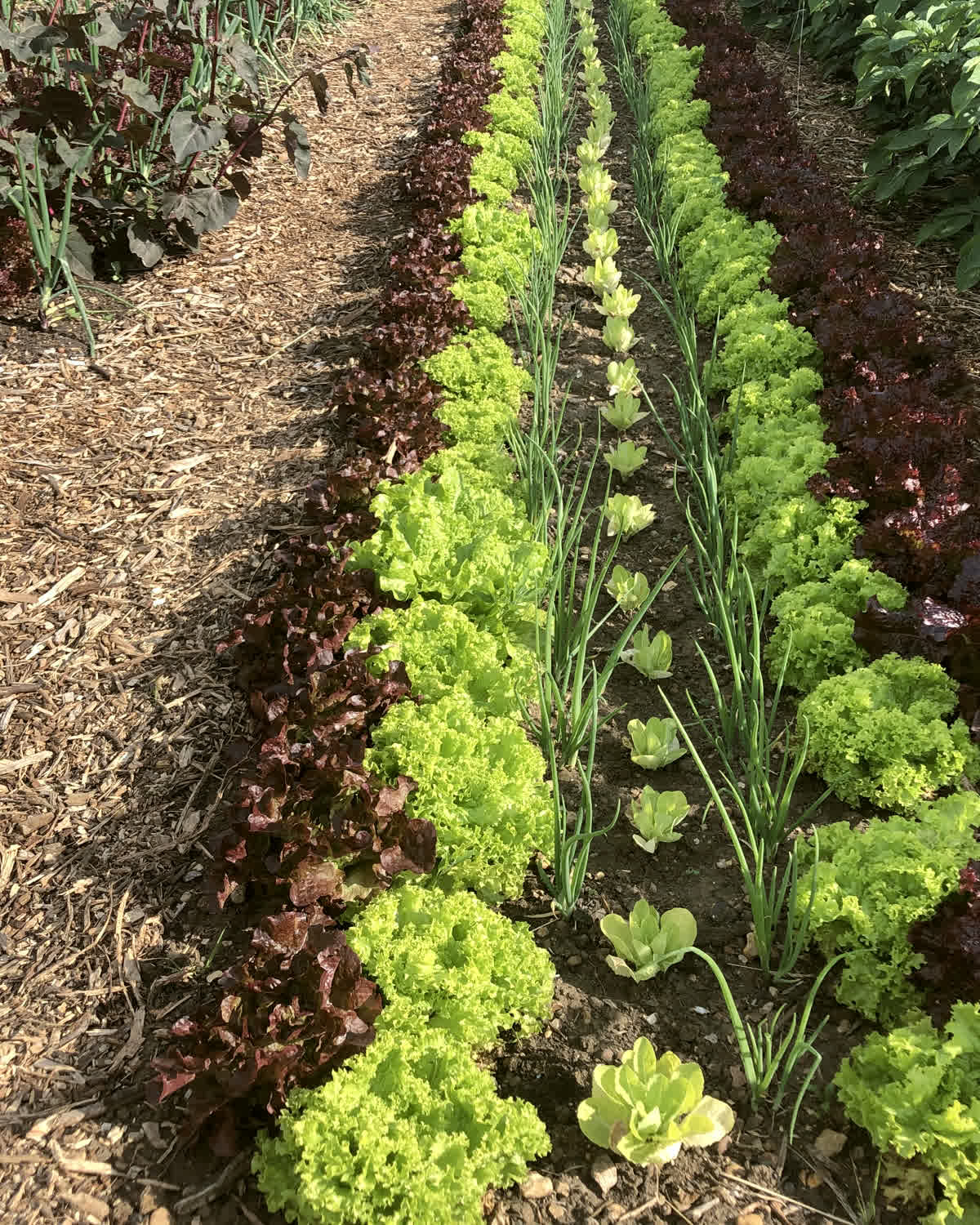
Grown at The Green Backyard, Peterborough
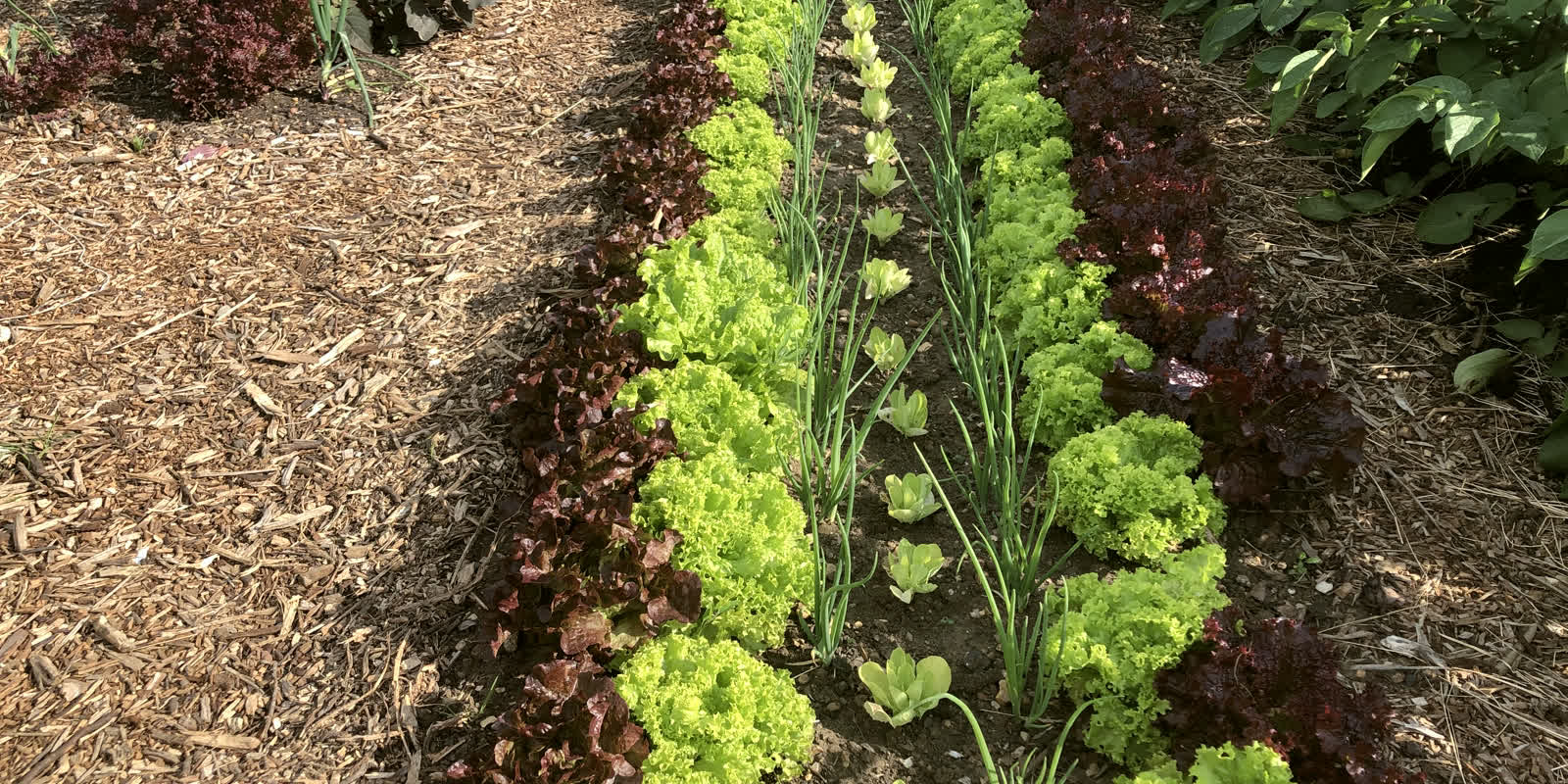
Beds planned for your soil, a 12-month growing calendar, and a starter zone of two or three productive beds planted by our team.
At The Green Backyard today: food production.
Soil and water testing in Survey, then a plan for how water is caught, stored and used on your site.
At The Green Backyard today: a pumped rainwater catchment.
An energy audit in Survey, then a plan for energy on your site, with suppliers and vetted contractors lined up.
At The Green Backyard today: solar for refrigeration, lighting and tool charging.
We call it Living Loops, our way of turning waste into soil and soil into food. Your starter zone includes a wormery.
At The Green Backyard: biogas and biochar are in development.
Living Loops
Don't disconnect. Diversify. Small and working beats big and wobbly.
What runs on your land depends on your site. We don't promise off-grid living or total independence.
05 The method
Turn the ring, tap a letter or use the arrow keys to see each stage.
Survey
Month 1Two site days, soil and water testing, an energy audit and a written discovery report.
You stop planting blind.
Envision
Months 2 to 3A scaled masterplan for food, water, energy and waste. A phased plan, a 12-month growing calendar, planning flags and a printed, bound design pack.
You know what goes where, and when.
Equip
Months 2 to 3Equipment specs, two to three recommended suppliers per system, indicative quotes and vetted contractors.
No guesswork and no cowboys.
Deliver
By month 3Our team installs and plants two or three productive beds and a wormery, so something is growing within weeks.
Without you lifting a spade.
Sustain
Months 4 to 12A monthly site visit and Q&A, a monthly call, weekday WhatsApp with a reply within one working day, and a year-end review with a year-two plan.
Someone who can see your garden and answer “why are my tomatoes like this?”
06 Two ordinary days
Drag across the picture. Here is where you could be in twelve months.
Every site is different, so what runs first depends on yours.
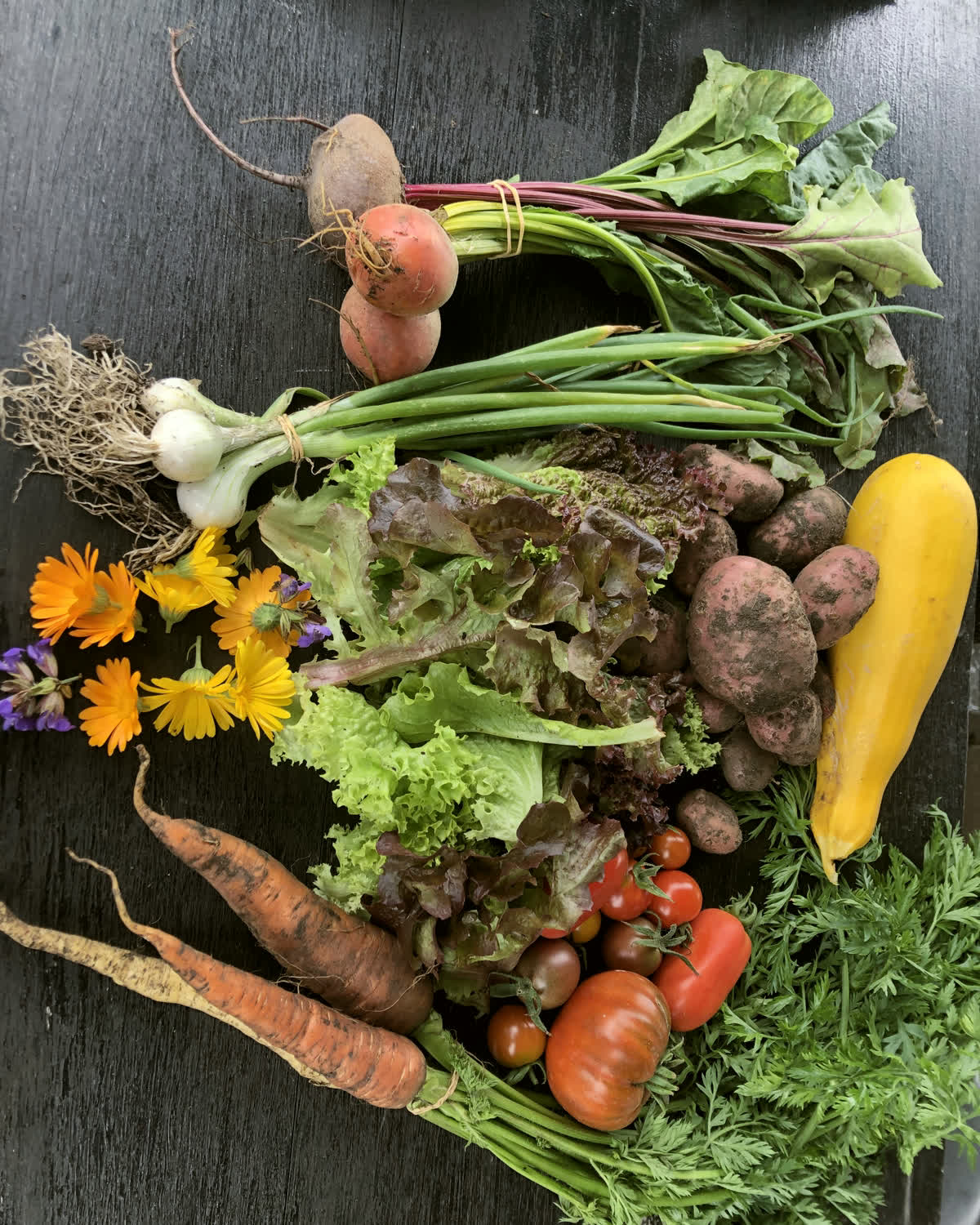
A day with your own garden
Twenty minutes in the garden before work, picking breakfast. The children run out after school to check on what's ready. On a summer evening, you cook a meal from your own garden and eat it outside together.
Your day now
Up early, straight into calls. Home late. A supermarket meal from an online shop. The children on screens. The garden is something you look at through the window.
Grown at The Green Backyard, Peterborough. A picture of the day we plan for.
07 What's inside
Twelve months, one to one, on your own land. Food, water, energy and waste, planned together. Open any line to see what it means for you.
What this means for you
Two site days, soil and water testing, an energy audit and a written discovery report. You stop planting blind, and you finally know what your ground and water are really like.
What this means for you
A scaled masterplan for food, water, energy and waste, a phased plan, a 12-month growing calendar, planning flags and a printed, bound design pack. You know what goes where, and when.
What this means for you
Equipment specs, two to three recommended suppliers per system, indicative quotes and vetted contractors. No guesswork and no cowboys.
What this means for you
Our team installs and plants two or three productive beds and a wormery, so something is growing within weeks. Without you lifting a spade.
What this means for you
A monthly site visit and Q&A, a monthly call, weekday WhatsApp with a reply within one working day, and a year-end review with a year-two plan. Someone who can see your garden and answer “why are my tomatoes like this?”
And three bonuses
What this means for you
A day for the whole family on preserving the glut and getting through the hungry gap. The summer harvest ends up in jars, not on the compost heap.
What this means for you
One calm page on the fridge for food, water, warmth and light. You know what to do if the power or the shops go down, and so do the children.
What this means for you
The family’s access to workshops at The Green Backyard for the year. It only works with community, so you meet other people doing the same.
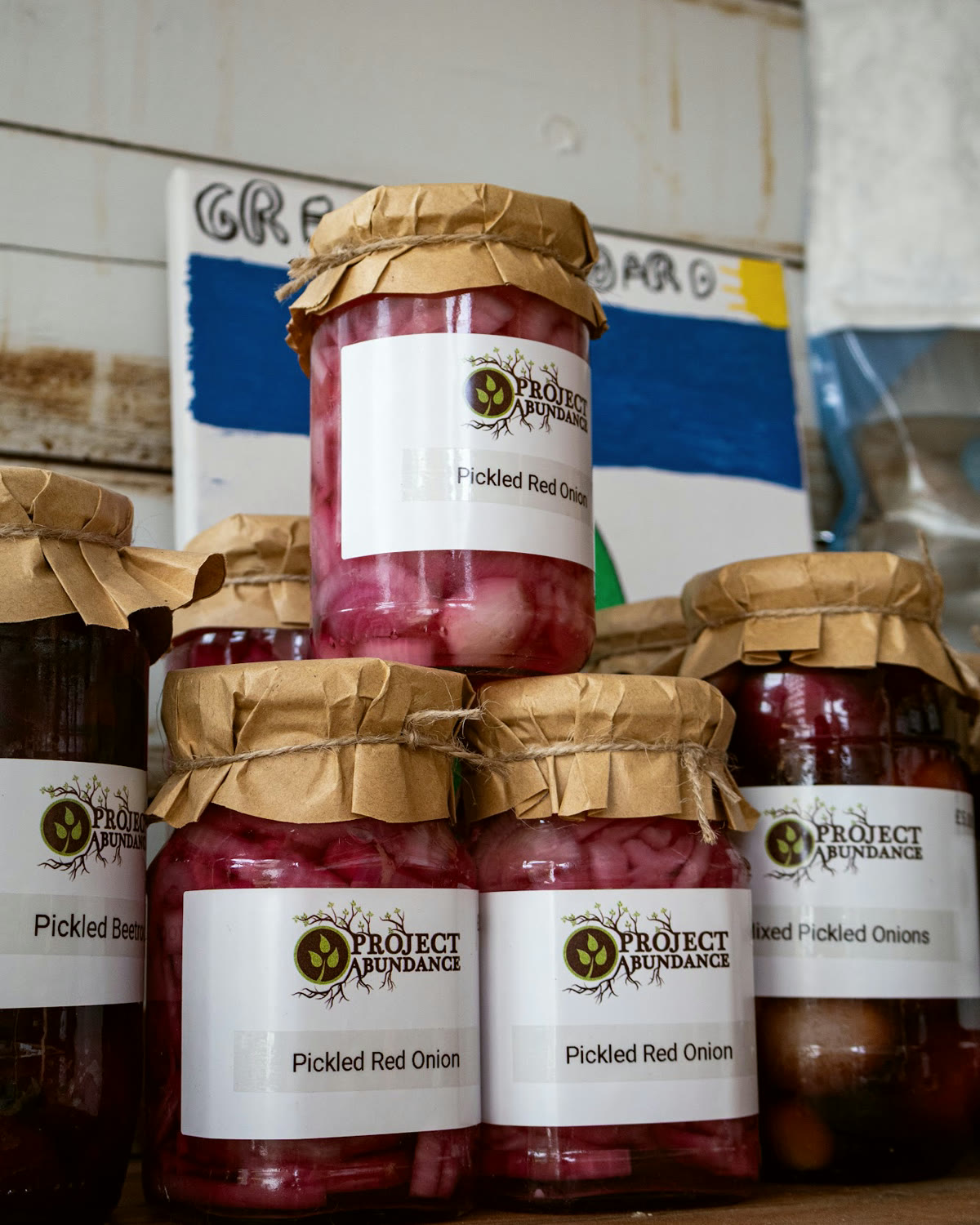
Preserving the glut. At The Green Backyard, Peterborough.
08 What happens next
Eight steps, in order. Open any step to read it.
Want more than your starter beds? Our team can add a bigger kitchen garden, quoted for your site.
See the gardens we buildYou book your Resilience Audit and pay £495, once. We confirm a date that suits you.
Half a day on your own land. We score your home’s resilience across eight areas, out of 40, and give you your first three moves.
We book your first site day and send you the goals questionnaire. The £495 comes off the Blueprint price.
Two site days, soil and water testing, an energy audit and a written discovery report.
Your bound design pack: a scaled masterplan for food, water, energy and waste, a phased plan and a 12-month growing calendar, with suppliers and vetted contractors lined up.
Our team plants your starter zone: two or three productive beds and a wormery. Something is growing within weeks.
Monthly visits and calls, and weekday WhatsApp with a reply within one working day.
We review the year together and write your year-two plan.
09 Our promise
“If anything in your starter zone fails in its first growing season, our team comes back and replants it at our cost.”
10 Who it's for
11 Questions
The things people ask us most, answered plainly.
For mowing and tidying, yes. A gardener is better value for that. A gardener looks after a garden. We design a working system for your site: soil and water tested, food, water, energy and waste planned, suppliers lined up, and your first beds planted by our team. It cost us over £300,000 to learn: about £100,000 on our systems and at least £200,000 more on trial and error. You get the shortcut.
£495, paid once. It’s a half-day on your own land. If you join the Blueprint, the £495 comes off the price.
The Blueprint price is shared with you on the audit day. Five places a year. That’s all we can do properly.
You don’t need to. We survey, design, line up suppliers and plant your starter zone. There’s a monthly site visit, a monthly call, and weekday WhatsApp with a reply within one working day. Your part is the good bit: picking, cooking and eating together.
Book your Resilience Audit by 31 January 2027 to have your starter zone growing for spring 2027. After that, new families start in the following window.
No. Food is where we start, because it’s the part you’ll enjoy. The Blueprint plans four systems together: food, water, energy and waste. What runs on your land depends on your site. The Calm Household Plan then puts food, water, warmth and light on one page, for if the power or the shops go down. We don’t promise off-grid living. Don’t disconnect. Diversify.
Neither are we. This is about your family’s security, and about good food and time outside together. Don’t disconnect. Diversify.
You didn’t fail at growing. You were never given a plan for your site, or anyone to ask. And if anything in your starter zone fails in its first growing season, our team comes back and replants it at our cost. That’s the Starter Zone Promise.
Bring them to the audit. Seeing your own land through our eyes usually answers it.
Yes. Book a private visit to The Green Backyard and walk round it with Lewis. Seeing it working is the quickest way to know if it’s right for you.
Not certified organic. We grow regeneratively, with natural feeds such as comfrey and nettle and nature-based pest deterrents. No synthetic fertilisers and no chemical pesticides.
We work within about an hour of The Green Backyard in Peterborough: Stamford, Rutland, Oakham, Cambridge, Huntingdon, St Neots, Northampton and the villages around them. If you’re not sure, ask us.
Lewis Vernum, founder of Project Abundance, delivers the first five Blueprints himself, with his team at The Green Backyard.
We hold a year-end review and write your year-two plan. If you want to go further, we can quote a full build for your site.
12 Real words
This is about The Green Backyard, our community work and a kitchen garden we built. It isn't about the Blueprint yet.
5.0 on Google, from 13 reviews
“You and your whole team are amazing 😊 You have not only transformed our garden but have also created so many more talking points between community members; all driving positive change around the local area, so thank you to you all.”
“Just good people doing good things in their bit of the world.”
“I learn so much every time I go there.”
From 10 free PECT workshops in summer 2025, with 99 people. And on our team volunteer days, all 18 staff who filled in our feedback form said they would recommend the day (August 2025 to June 2026).
13 Your next step
Lewis Vernum, founder
£495, paid once. Taken off the Blueprint if you join. Book by 31 January 2027 to be growing for spring 2027.